News from the world of carbon footprint calculation.
Carbon Footprint in the Cultural Sector: The Biggest Emissions Often Remain Behind the Scenes
When sustainability in the cultural sector is discussed, attention often focuses on what audiences can see. Yet the greatest opportunities to reduce carbon emissions, save energy, and lower operating costs are often found behind the scenes—in the day-to-day operation of cultural buildings. Which measures have the greatest impact, and where is the best place to start?
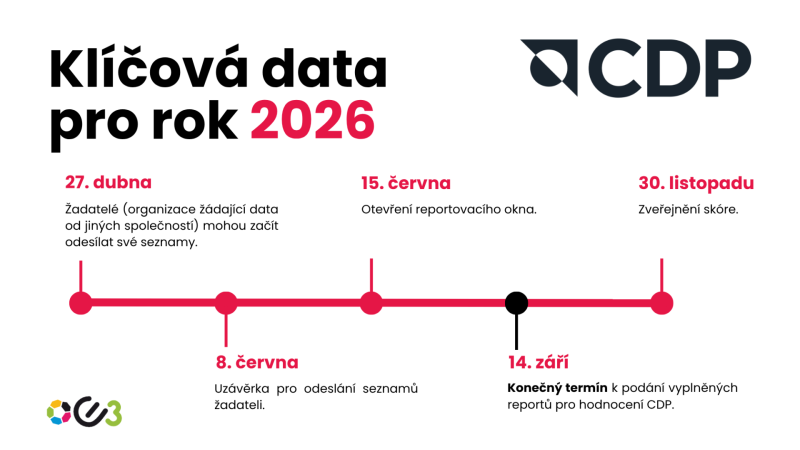
Carbon transparency in practice: how to approach CDP in 2026
CDP (Carbon Disclosure Project) reporting is no longer the domain of only the largest corporations. In the past year alone, more than 23,000 companies worldwide used it, collectively representing nearly two-thirds of global market capitalization. The reason is simple: investors, customers, and other stakeholders are increasingly monitoring how companies approach environmental risks and opportunities. CDP provides a transparent tool that allows them to do so easily and in one place.
At the same time, it doesn’t have to be only about external pressure on companies. A CDP report also helps organizations better understand their own carbon footprint, set meaningful targets, and communicate them more effectively with partners.
The Carbon Footprint of an Event and What You Can Do About It as an Organizer
We’re seeing more and more how sustainable event planning is becoming a powerful marketing draw. But where do the words end and real impact begin? Is it more important to offer a meat-free menu, or to ensure easy access by public transport? And how big a role can effective communication actually play?
Emission factors are a crucial element in calculating the carbon footprint
Without exception, everyone who deals with carbon footprint calculations has had to come across the term "emission factor" in their work. They must also have asked themselves where and what emission factor to choose correctly. This is a step that significantly affects the result of the carbon footprint calculation, its transparency, quality or auditability. This applies to both the area of determining the carbon footprint of a company and the product carbon footprint. It is not an easy task, which is why we have decided to share our perspective and experience with you in the following lines.
Commentary: We were there before ESG and we will be there after it
ESG is supposedly on the decline, regulations are being eased, and the Omnibus is supposed to “save competitiveness.” But the carbon footprint, risks, and investor expectations are not going away. What really changes – and what remains – when the ESG hype dies down?
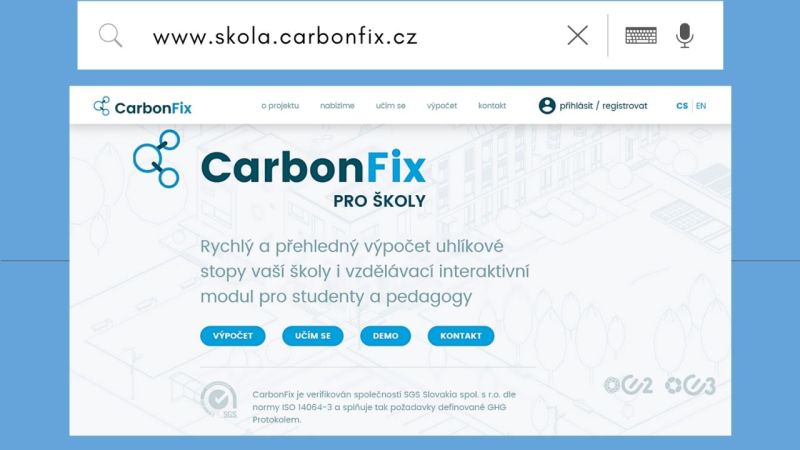
CarbonFix for Schools: a tool for carbon footprint education in practice
Our new carbon footprint calculation tool specifically targeted at educational institutions, CarbonFix for Schools, is an online tool that allows schools to determine the carbon footprint of their operations, understand its main sources, and work with the results. Systematically, clearly, and practically.
At the same time, it is an excellent educational tool where students can experience the basic principles of carbon footprint calculation directly on the specific data of their own school.
Reducing a company’s carbon footprint doesn’t have to be just an administrative or bureaucratic burden, as many still believe. On the contrary, a well-designed decarbonization strategy can bring numerous significant non-financial as well as economic benefits even to businesses that are not yet subject to legislative requirements.
It’s not only about lowering operating costs through energy efficiency and the transition to cheaper renewable sources, but above all about strengthening competitiveness and sustainability. Large corporations and investors are increasingly demanding sustainability and carbon footprint data from their suppliers and partners, making decarbonization a key criterion for maintaining existing business relationships and securing new contracts. Thus, it is no longer merely an environmental issue, but an effective tool for building more resilient and innovative business operations.
The Carbon Footprint of Plastics: A Cross-Sector Challenge
Plastics are everywhere — in products, packaging and waste. Their ubiquity makes them one of the greatest environmental challenges of our time. The carbon footprint of plastics is no longer just a waste management issue. It affects product design, supply chains and corporate strategy. So how can companies navigate this complex topic and start measuring, managing and reducing their plastic footprint?
The Biggest Revision of the GHG Protocol in 20 Years: What to Expect and How to Prepare
The GHG Protocol, the cornerstone of corporate greenhouse gas emissions measurement, is undergoing its first major revision in over twenty years. Not only are the methodologies changing, but also the very perception of corporate responsibility for emissions. What’s changing—and why should Czech companies start paying attention?
CarbonFix: An Easy-to-Understand and Reliable Tool for Calculating Corporate Carbon Footprints
Understanding a company’s carbon footprint is becoming essential—not only for those striving to act responsibly, but also for businesses that want to remain part of global supply chains. The CarbonFix tool helps companies quickly and clearly identify the sources of their emissions and start managing them effectively.
Carbon Footprint of the Dairy Industry: Challenges, Regulations, and Reduction Opportunities
Businesses across all sectors are facing increasing demands to reduce greenhouse gas emissions, with sustainability becoming the new standard. In the dairy industry, emissions span all three scopes of carbon accounting, with the largest share falling under Scope 3 indirect emissions. This article explores where these emissions originate, what reduction strategies are available, and what is essential for building an effective and realistic sustainability strategy.
Sustainability and environmental responsibility are becoming essential aspects of modern business. One of the key tools that enable companies to quantify and manage their environmental impact is the Carbon Disclosure Project (CDP).
CDP 2024: Challenges we have overcome together and what awaits us in 2025.
In 2024, the Carbon Disclosure Project (CDP) took another step in the evolution of corporate environmental reporting. New areas, such as biodiversity and plastics, were added to the assessment, while the processes for reporting on climate change, forests, and water were streamlined. What were the key developments this year, and what can we expect in 2025? This article will explore the main changes and challenges companies will face in the next CDP assessment and how they can prepare for them.
As climate change continues to be a major global issue, companies are under increasing pressure to contribute actively to environmental protection. One of the most significant tools for assessing corporate environmental impact is the CDP platform. CDP is a nonprofit organization that has been helping companies, cities, and governments transparently report their environmental impacts for over 20 years while also providing tools to improve sustainability. Every year, thousands of organizations worldwide respond to CDP questionnaires, focusing on areas such as climate change mitigation, biodiversity protection, and sustainable management of water resources and forests.